Choosing the Best Under Sink Water Filter in 2024
Choosing the best under sink water filter is critical to your family’s health and quality of life. Given the diversity of water quality issues, such as chlorine, lead, bacteria, and even drug residues, water quality needs vary from household to household. Some families may need specific contaminants removed, while others may be more focused on overall water quality improvement. Therefore, understanding your family’s specific needs is key to choosing the most appropriate water purifier.
Key considerations when choosing an under-sink water purifier
Filter Life
Filter life is critical to long-term maintenance costs and ease of use. Longer-lasting filters mean less maintenance and lower long-term costs. Therefore, the frequency of filter replacement and associated costs should be considered when making your selection.
Flow rate
Flow rate determines how fast water is delivered. A high-flow rate water filter provides purified water quickly, making it suitable for busy family life. However, certain high-efficiency filtration technologies may slow down the flow rate, which is a factor to weigh when making a choice.
Ease of Installation
The ease of installation of a water purifier directly affects the user experience. Some systems are designed to be easy to install without specialized tools or expertise, while others may require professional installation. Systems that are easy to install save users time and possible installation costs.
Filtration Effectiveness
Filtration effectiveness is key to evaluating the performance of a water purifier. It not only affects the taste and odor of the water but also relates to the ability to remove harmful contaminants. Different water purifier technologies (e.g. reverse osmosis, activated carbon filtration) vary in their effectiveness in removing different types of contaminants.
NSF Certification and Material Safety
NSF certification is an important measure of a water purifier’s safety and effectiveness. Water purifiers with NSF certification have passed rigorous testing to ensure that they are effective in removing specific contaminants and that the materials used in their manufacture are safe and non-hazardous.
Choosing an NSF-certified water purifier ensures that users receive healthy, safe drinking water, and it is an important factor that users should emphasize when choosing a water purifier.

Top Under Sink Water Filter Models for 2023
Based on the latest reviews and information for 2023, let’s delve into the top under-sink water filters, including Waterdrop, Filtrete, Aquasana, and Apec Water Systems, and provide a deeper understanding of their features and benefits.
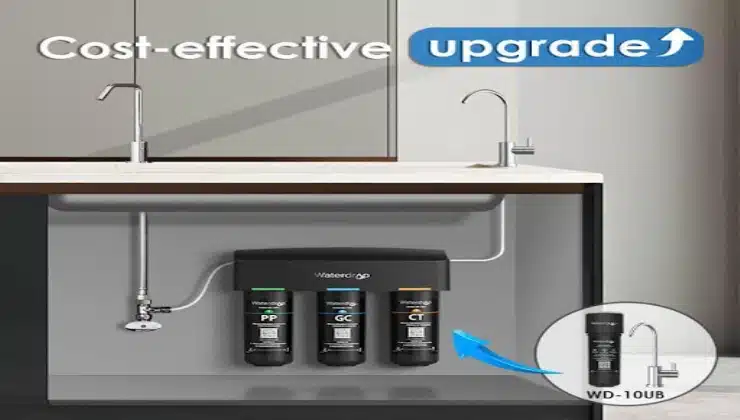
Waterdrop Under Sink Water Filter System
- Features: This system boasts a tankless design, efficient filtration, and a long-lasting filter. It’s versatile enough to adapt to various settings, including residential sinks and RVs.
- Pros: The activated carbon filter improves taste and smell, and the filter can last up to 2 years. It’s also NSF-certified.
- Cons: Some users have reported a decrease in functionality after a few months, and it has a relatively low flow rate of 0.75 gallons per minute.
- User Feedback: Customers appreciate the ease of installation and the noticeable improvement in water flavor and clarity.
Filtrete Under Sink Water Filtration System
- Features: Offers efficient filtration at a competitive price, making it ideal for budget-conscious households.
- Pros: It’s NSF Standard 42 certified, easy to install, and improves the flavor of water. The filter life lasts up to 6 months.
- Cons: Some users have experienced high pressure and shorter filter life compared to other models.
- User Feedback: Many customers found the product easy to install and were satisfied with the improved water quality.
Aquasana AQ-5200.62 2-Stage Water Filter System
- Features: Provides a two-stage filtration process, capable of removing up to 99% of 77 different contaminants. Available in three finishes to match kitchen decors.
- Pros: Eco-friendly with minimal disposable plastic parts, and retains healthy minerals. It has a filter life of about 600 gallons.
- Cons: Some reports of leaks have been noted, and customer support has been critiqued.
- User Feedback: Users have appreciated the choice of finishes and the long filter life.
APEC Water Systems ROES-PH75 Water Filter System
- Features: Utilizes advanced reverse osmosis technology, offering superior water purification.
- Pros: Includes a 6-stage filtration process and adds high-purity calcium carbonate for alkaline water. It also removes 99% of over 1,000 contaminants.
- Cons: Requires considerable under-counter space and has a 1-3 gallon waste-to-filtered water ratio.
- User Feedback: Many users prefer this system for its ability to increase alkaline levels in water and its comprehensive filtration capabilities.
Installation and Maintenance
You should actively consider the installation process and necessary tools for different models. Regularly replacing the filter plays a crucial role in maintaining water quality and the performance of your device. For instance, reverse osmosis system may require more frequent maintenance, while single-stage carbon filters typically offer greater durability. Weighing the long-term maintenance costs, including the frequency and expense of filter replacement, is essential.
Advanced Filtration Technology
You should select the appropriate technology based on your specific water quality issues. Reverse osmosis is highly effective in removing small contaminants, such as heavy metals, but may increase wastewater production and reduce mineral content. On the other hand, carbon filtration excels at improving the taste and smell of water, making it ideal for removing chlorine and chemical substances. Your choice should align with your specific needs.
Environmental Impact and Cost-Efficiency
When choosing a water filter, it’s vital to consider its environmental impact, especially regarding water and energy savings. For example, some high-efficiency reverse osmosis systems might produce more wastewater, while other systems are more energy-efficient. Evaluating the long-term cost-effectiveness involves considering the initial investment, operational costs, and potential savings in water and energy. An environmentally friendly water filter not only helps protect the environment but can also reduce costs in the long run.
Conclusion
In selecting the most suitable under-sink water filter, you need to comprehensively consider your personal needs, water quality issues, budget, and environmental impact. Understanding the strengths and weaknesses of different models, along with their maintenance requirements, will aid you in making an informed decision. The ultimate goal is to find a solution that meets your family’s needs while being kind to the environment.


